
Telehandlers
*For illustrative purposes only. Operate equipment in accordance with all manuals and safety requirements.
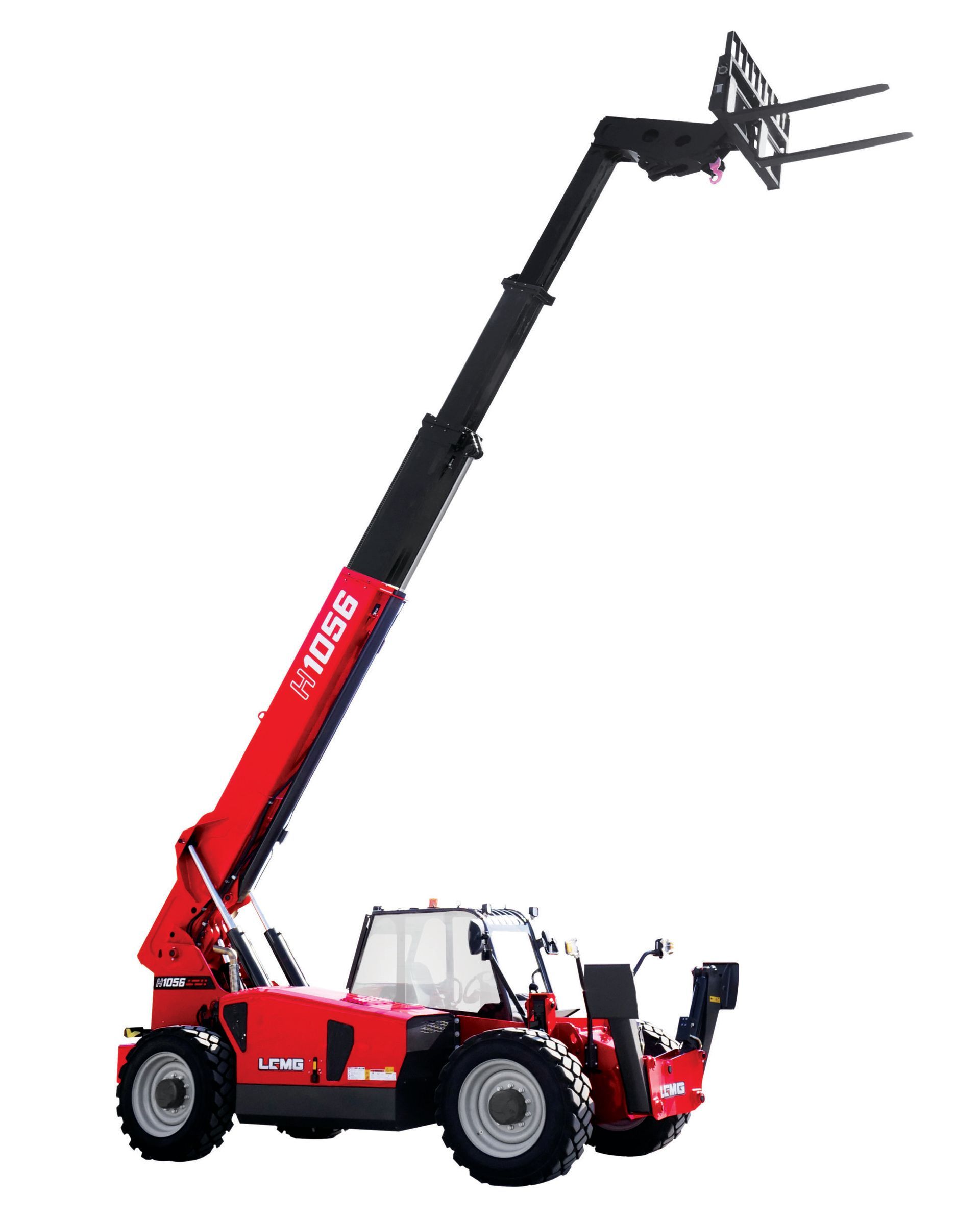
H1056 Diesel
- Max Lifting Height: 56'1"
- Max Outreach: 42'
- Max Capacity: 10,000 lb
- Machine Weight: 33,730 lb
- Power: Cummins QSF 3.8L T4f/Stage V, 74 hp
- Option: Cummins QSF 3.8L T4f, 120 hp
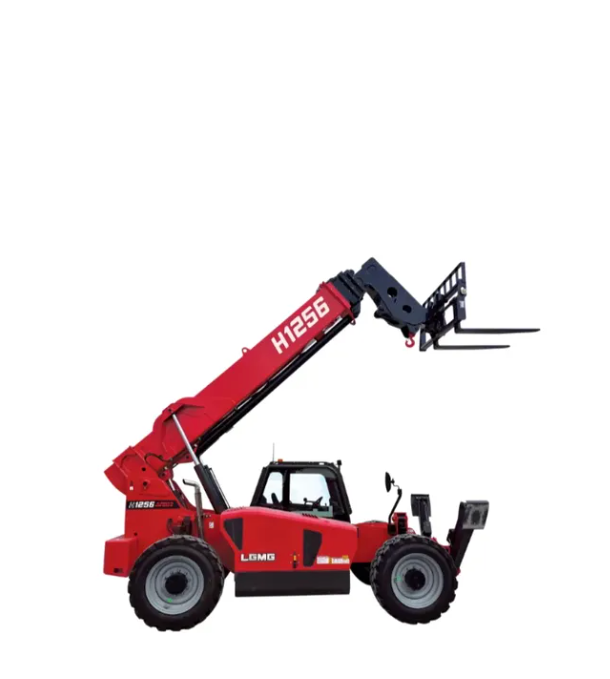
H1256 Diesel
- Max Lifting Height: 56'1"
- Max Outreach: 42'
- Max Capacity: 12,000 lb
- Machine Weight: 34,833 lb
- Power: Cummins QSF 3.8L T4f, 120 hp
Products
LGMG offers two telehandler models with 10,000 lb and 12,000 lb lifting capacities. Both models feature a maximum lifting height of 56'1" and a maximum outreach of 42', while providing the performance and versatility needed for demanding applications.
What is a telehandler?
Telehandlers, also known as telescopic handlers, rough terrain forklifts, or telehandler forklifts, are versatile machines designed for heavy-duty material handling tasks across construction sites, industrial environments and oil and gas applications among others. Telehandlers combine the lifting capabilities of a forklift, with the reach of a telescoping boom. Telehandlers are built for the rugged environment of jobsites in all phases.
What makes telehandlers important material-handling equipment?
Telehandlers are often one of the first machines to arrive on a jobsite to unload the materials off trucks as they arrive. Telehandlers are also one of the last machines to leave jobsites as they can be used to remove debris in hoppers or dumpsters and load other equipment and material onto trucks to clear the jobsite. During construction, telehandlers are important because they combine the lifting ability of a forklift with the reach and versatility of a crane, making them one of the most flexible machines on site and a true jobsite workhorse. They are designed with a high load and lift capacity and can handle heavy loads and place them at height.
Unlike a standard forklift, a telehandler has a telescopic boom that can extend forward and upward. This allows operators to place materials up high, across obstacles, and in hard-to-reach areas. Telehandlers can also switch between different attachments, turning one machine into several types of equipment. For example, a material bucket can be attached to transport loose items, or a grapple attachment can be used for moving logs or scrap handling.
Why choose a telehandler?
Telehandlers are chosen by their load capacity and reach, as their main appeal is the ability to pick and place heavy loads. With the wide range of available attachments, telehandlers can be used to do the work of several machines, transforming them into an adaptable platform that can handle diverse applications. Their versatility has made them indispensable across the industrial landscape, where they can be seen lifting pallets of material to support elevated work tasks, such as construction access, maintenance work, masonry work, and warehousing.
Telehandlers offer exceptional value through their multifunctionality and durability. Their ability to perform a wide range of material handling tasks makes them an essential piece of fleet equipment. They are also built for rough terrain environments, allowing them to be used from start to finish at a jobsite.
Why choose an LGMG telehandler?
LGMG telehandlers are engineered to handle demanding applications with impressive load capacity performance. Designed with rental in mind, LGMG telehandlers combine durability, ease of operation and simplified maintenance to help maximize uptime. Built and tested for demanding jobsite conditions, these machines deliver reliable performance across a variety of material handling tasks.
LGMG telehandlers feature robust construction and standard four-wheel drive to handle whatever jobsite conditions they may face. Their rough terrain capability helps maintain stability and traction across uneven ground, mud, and challenging outdoor surfaces. Industry-standard Dana® limited slip axles further enhance traction and machine performance in demanding applications. Three steering modes, including four-wheel steer and crab steer, allow operators to navigate tight job sites with greater precision and control.
Standard features are designed to improve operator confidence and productivity throughout the workday. The ergonomic cab includes intuitive controls, multiple load chart placements for quick reference, and a spacious layout that helps reduce operator fatigue during long shifts.
Another key advantage is LGMG’s industry-leading warranty*, which provides long-term confidence and helps reduce lifecycle costs for owners.
*Terms and conditions apply. Subject to LGMG’s warranty policies then in effect. Please visit www.lgmgna.com/warranty for details.